Episode Transcript
[00:00:02] Speaker A: All right, we're live.
[00:00:03] Speaker B: We're live.
[00:00:04] Speaker A: Excellent. Well, welcome back. Gregory and Paul.
[00:00:07] Speaker B: Show everyone.
[00:00:08] Speaker A: Paul, I'm Gregory. And you know, we always break down latest startup SaaS, AI, whatever the Internet is debating this week.
I know I always aim for a smart take, but I end up with plenty of dumb ones. And Paul always let me know when they're stupid. It's true. I like to think we'll hit on a few scorchers perhaps. Of course, we always feature some memes at the end. We love memes the best.
[00:00:35] Speaker B: Absolutely. So we're always streaming live on X and LinkedIn every Friday at noon Pacific time.
Then we try to post the videos to YouTube.
I think we are ready to start thinking about podcast platforms. What do you think?
[00:00:53] Speaker A: You think? So I, I put it up on YouTube. I try to do it. I get it up on every Friday. Yeah, yeah. No one follows us over there.
[00:01:00] Speaker B: We get some views and stuff for the Internet Archive.
[00:01:03] Speaker A: I think if we did, I think we did like take the audio versions and put them onto podcast platforms, right? We, we'd reach more people.
[00:01:11] Speaker B: I think so too.
I think, I think we're almost there.
Distributed onto Apple, Spotify, Google.
[00:01:20] Speaker A: It's so funny. I thought about like, do we create like an intro or whatever? And that was just like, I don't even know if I, if I care. Like, like, I like it with the cool graphics and I think it brands it well. And then do people really need like a theme song and a bunch of stuff? Maybe. I don't know.
[00:01:36] Speaker B: I, I. So to be completely honest, when I listen to podcasts, I just skipped the first five minutes.
[00:01:42] Speaker A: All the ads.
[00:01:43] Speaker B: Yeah, well, all the ads, all the intro stuff, I just skip right into the middle of it. Just like, just give me the content.
[00:01:51] Speaker A: I kind of do the same thing.
I, I, I, I mean, I remember when I first heard the all in theme song, I thought it was kind of catchy, right? Kind of cute, kind of corny.
[00:02:03] Speaker B: Right.
[00:02:05] Speaker A: But it was kind of cool. But then like, after I've heard it like 9, 000 times.
[00:02:10] Speaker B: Skip right through. Skip right.
[00:02:12] Speaker A: Anyway, should we talk about events?
[00:02:15] Speaker B: Let's do it.
[00:02:16] Speaker A: Okay.
So I'm halfway through the North American Vibe, your SAS tour.
I'm exhausted.
Spoken. Bellevue spoke this week at Seattle Tech Week, the AI house.
I'm calling it number one talk. I tell Tech Week had over 550 people RSP'd.
[00:02:41] Speaker B: Wow. No, yeah, I was just gonna ask how many people.
[00:02:44] Speaker A: Yeah, 550 people RSVP'd. We, we had the packed house. We just stopped checking people in because like the Luma thing, you can't scan it on. I know people are having trouble scanning the codes, which seemed really basic. I was quite surprised that like there was a bunch of people struggling to get a Luma code. So I wasn't able to track exactly how many people came in. There's definitely like a full house and maybe holds like 100 and something people.
[00:03:08] Speaker B: Right.
[00:03:09] Speaker A: But like mine was the only solo talk. Like if you look at the events too, most of them are panels or groups people. I was one of the few solo presenters and still was able to have a great job. So I'm super happy about, about that.
[00:03:21] Speaker B: How was the, how's the space?
[00:03:24] Speaker A: Did I. Have you seen the, the photos? Do the a. So the AI House is part of the.
There's a venture firm that's backed originally by money from Paul Allen, like one of the founders of Microsoft.
[00:03:39] Speaker B: Microsoft, Right.
[00:03:40] Speaker A: Yeah. And he has a thing called the Allen Institute.
And so the Allen Institute has a venture. There's. They do a ton of stuff for Seattle. It's great. Like medical research and hospitals and like, it's, it's excellent. And I want to make sure to make it clear. Like, it's, it's amazing what that guy's done and what he's done with his money.
[00:03:57] Speaker B: Right, Right.
[00:03:58] Speaker A: But they have venture firm and that's where the AI is. Because I was like, AI House of It is Allen Institute. And so they do focus on AI but they have a space on Pier 70 on the waterfront.
[00:04:12] Speaker B: Wow.
[00:04:13] Speaker A: Seattle. And dude, it is beautiful. Like, I go as far as it's, it's one of like the best spaces I've ever been in. Like, and I've been in a lot like, it, it's, it's amazing.
The weather this time has been just fantastic for Seattle Tech Week. It's beautiful. We've had like 70 to 80 degree weather.
[00:04:32] Speaker B: Yeah.
[00:04:33] Speaker A: On the waterfront.
It is astounding. Like, it was great.
So it was wonderful. I was very excited to have my talk there and they were like really, really nice.
Yeah. And it went, it went well. In fact, like, I'm gonna move to my co. Working space to, to the aisles.
[00:04:50] Speaker B: I think that's amazing.
[00:04:52] Speaker A: Yeah.
[00:04:53] Speaker B: Very cool.
I, I love that.
[00:04:55] Speaker A: I, I, it was a, it was nice.
[00:04:57] Speaker B: Yeah. I think, I think every city needs that kind of space. I'm trying to look for a similar space in Toronto.
[00:05:04] Speaker A: Yeah, you gotta find a Toronto.
[00:05:05] Speaker B: Right.
[00:05:05] Speaker A: Because I'm coming. Toronto.
[00:05:06] Speaker B: Correct.
[00:05:07] Speaker A: I met a few people at the event too, who are from Vancouver and Toronto. We're like doing. So we should. If you're listening to this and you're in the Toronto area and you want to partner with us to help get a draw during Elevate, we would, we'd appreciate that. Yeah. And I want to take. Take my talk, same talk, and I'll do it again in Toronto.
[00:05:24] Speaker B: I think it'll be a massive hit. It will be beginning of October, October 6th.
[00:05:30] Speaker A: Is that the right date? I had it.
[00:05:31] Speaker B: That's. That's the date.
[00:05:33] Speaker A: Okay, great.
Yeah. So six is the night before elevate starts.
[00:05:40] Speaker B: Yeah. It'll be the Monday evening, so hope to see people there.
[00:05:46] Speaker A: Yeah, I gotta book my flight. Awesome.
And then I have one other event.
You're coming to San Francisco.
[00:05:53] Speaker B: Love it. Yes. That'll be end of October, I think.
[00:05:58] Speaker A: Yeah. So put up the page because we. We've got some insane speakers and the invites are fantastic. So this one is a mixer. It's invite only. So if you want to go, you can, you can apply on the. The Luma.
[00:06:18] Speaker B: Right.
[00:06:19] Speaker A: But we've got speaker from Bain Capital and we have this guy Gautam from Strata Capital, who's had a really long and successful career in venture capital, a couple other vcs, and there's a whole bunch of people I haven't even put up here yet that are coming. It's gonna be excellent. I'm really excited about this. Yeah. And I can't wait to see.
[00:06:44] Speaker B: See it together, so. Well, that's amazing.
[00:06:48] Speaker A: Yeah. You know, I've done a lot of events. Like I had my own events business at one point and I know this space in San Francisco. And I was talking to my buddy who's co hosting this, Arjun Dev Aurora, who's been around Adventure Capital. He was at 500 Startups, which is 500 global now, and I was like, hey, we should do some around TechCrunch Disrupt.
This was a few months ago because they knew, like, if you book it early, we'll get a great space and we'll do something interesting. If you try to scramble and do these things the last minute, it's a pain. So, like I put down all my own money on this and rented out space and had the confidence, like, we would pull it off, we'd find speakers, maybe get some sponsors to help. But there's a moment where I'm like about to do this. I was like, are you sure you're gonna just. I was like, yeah, I gotta do this. I have to do something for Disrupt. I want to get back in events. Like, I think it's really important that events are back, you know.
[00:07:39] Speaker B: I think so.
[00:07:40] Speaker A: Yeah.
[00:07:41] Speaker B: It's just so much easier to make connections.
Yeah.
[00:07:45] Speaker A: Like if you in marketing like to plan a great event, it takes time and you have to do it well in advance.
[00:07:51] Speaker B: And so, yeah, I'm learning, I'm learning all the details right now.
[00:07:58] Speaker A: We'll do. We'll have fun and we'll have fun in Toronto. I'm sure we'll find. We'll find some people. I know it was like kind of last minute that we planned it relative to this, but I'm excited to come and hang out. I haven't been to. I've. I've never been to Toronto.
[00:08:12] Speaker B: That's wild.
So, yeah, I guess usually you come this, this way to visit New York. I suppose.
[00:08:20] Speaker A: Well, I, you know, I've been to Vancouver many times with like family there and then I been in Montreal a bunch. Like as a kid when I was very young, I lived in Vermont and so we went to Montreal all the time. And I love Montreal. I've been there many times, but I just never went to Toronto. I didn't know a lot of people there and it's not really on the way to anywhere, so I hadn't been. So I'm excited to check it out.
[00:08:43] Speaker B: Right. Awesome.
Would be amazing to see you here. Beginning of October.
[00:08:48] Speaker A: Yeah, dude, it's gonna be fun, you know, once in person. Right, so.
[00:08:54] Speaker B: Yeah, that's right.
Shall we get into the dirty news?
[00:09:01] Speaker A: Yeah, let's do it.
[00:09:03] Speaker B: Okay, I'll kick us off. It is officially August.
It's crazy. Most of the year has been gone or majority of the year.
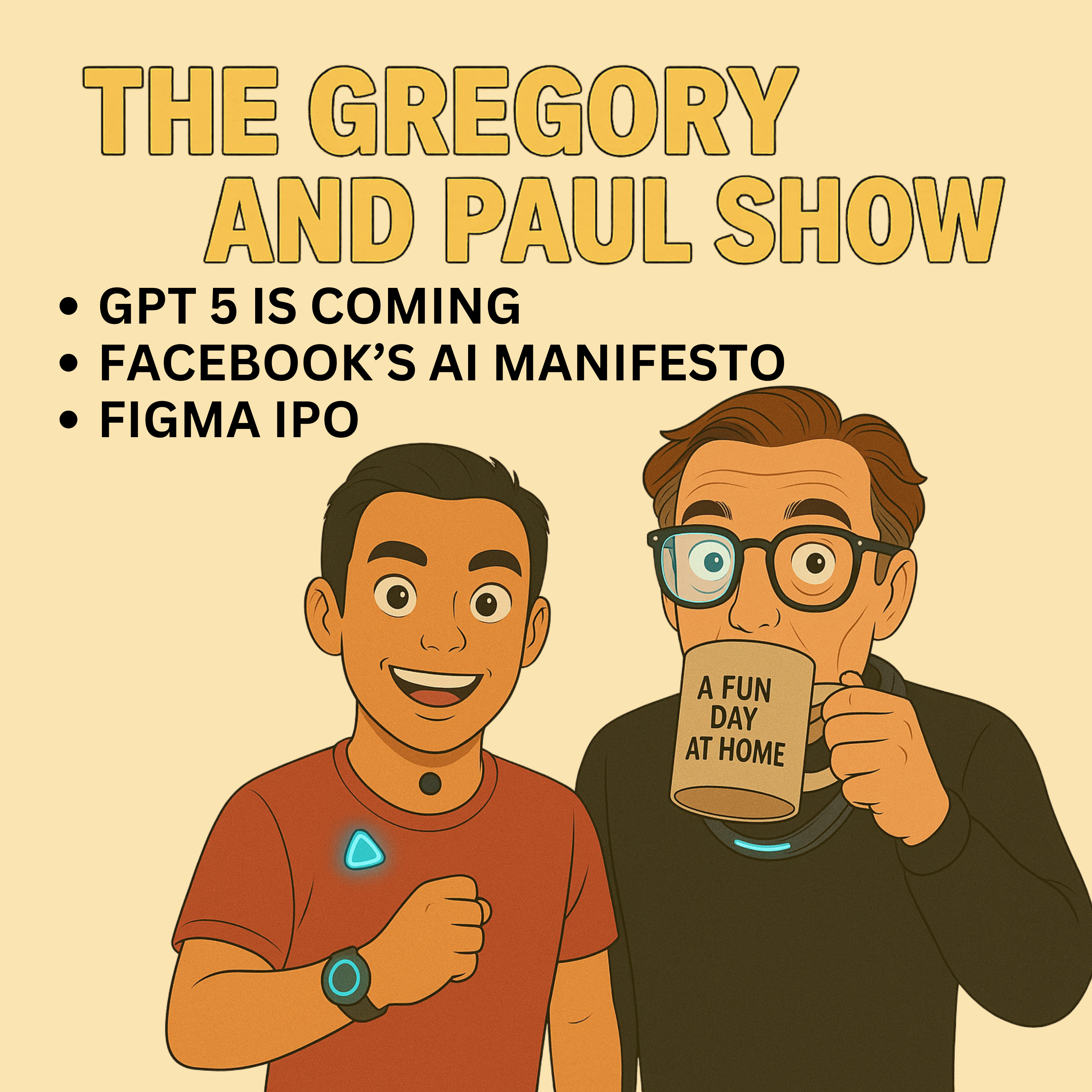
This means that GPT5 launch is right around the corner.
There has already been lots of rumor, lots of behind the scenes benchmarks, leaks even, because this is now one of the biggest events of the year. Very similar to how Apple was before people kind of stopped caring.
The rumor with GPT5 is that it's going to be a massive upgrade over GPT4. GPT 3.5.
I feel like it's one of the last models we either see if this doubling of capacity or the capability of GPT can still hold the trend line. So we're super excited to see this.
[00:10:06] Speaker A: Oh, do they have it in the official OpenAI Twitter?
Oh, is it? Do they say OpenAI GPT5 is coming out? I guess Sam acknowledged it. I thought I just saw it.
[00:10:18] Speaker B: Yeah. Yeah. So Sam has. Sam says GPT5 will be released August.
[00:10:24] Speaker A: But they didn't give it a date.
[00:10:25] Speaker B: Right, of course not. Yeah, yeah, of course, of course.
[00:10:30] Speaker A: I, I, you know, it reminds me exactly of like when Apple used to release the OS releases around wwdc and it was a big thing.
[00:10:39] Speaker B: Yeah.
[00:10:40] Speaker A: And.
[00:10:41] Speaker B: Or iPhone. Right. Like, yeah, it's going to be the next device. It's going to be a new iPhone. Is it going to be a new Mac iPad?
[00:10:48] Speaker A: Well, what do you think is going to be the impact of startups? Right? So like there's two scenarios, which is like the technology. So, and a lot of people talking about this lately how like the upgrade to an LLM will improve your product that's built on top of it. Like, so there's that scenario, there's the other scenario which is like, does the new GPT5 kill some startups? Like other things that people are doing that maybe GPT5 will do that, maybe render your startup obsolete? And that's what used to happen with like the iPhone and the iOS release.
[00:11:22] Speaker B: Yeah. So it still is.
That's exactly what will happen. Right. So a lot of the GPT wrappers or foundational model wrappers just is just a bunch of fancy prompts sitting on top of the foundational model. So if that capability gets in built into the foundational model, then all of these companies collapse.
[00:11:45] Speaker A: Are there any ones you think are at risk?
[00:11:48] Speaker B: Most likely anyone that is doing image generation, let's say. Right. With fancy prompts.
[00:11:57] Speaker A: Do you think any of the things like Runway ML or some of the other image models are at risk too?
[00:12:05] Speaker B: We don't know. I don't know. I, I think that, I think as these like models gets bigger and bigger, the token context window gets bigger, some of the adjacent things goes away as well. So there's a lot of companies that kind of help you work with the limited token context window. Yeah. The GPT5 that goes up to like a million tokens. Million tokens is a lot.
That is essentially any kind of code base that has a million words in it. That's a huge code base. That means you don't need any adjacent caching system to get the GPT to essentially just work with your entire code base that could potentially be a direct competitor to Claude.
I think Cursor is already starting to tease that they will use GPT5 as like the default model instead of Claude. So all these companies are starting to compete with each other around the same things. Right. Like lines are blurring.
GPT5 is saying, why should Claude be the de facto model for developers? We should, we should have a piece of that too.
[00:13:22] Speaker A: Yeah, I think I, what I don't know is like does it, does the one model to solve them all prevail or, or are there like going to be hyper niche targeted approaches, models, software?
I mean I, I, I was thinking about this the other day because like so I wrote that post about how I hated chatgpt now I thought the writing sucked.
[00:13:48] Speaker B: Right.
[00:13:48] Speaker A: I wouldn't, I wouldn't hire it to even write some copy to promote a 50 off cinnamon rolls campaign for a gas station because it was just so tasteless in terms of like its capabilities when it comes to writing.
And I'm basically been using Claude for, for as like a writing assistant.
[00:14:07] Speaker B: Yeah.
[00:14:08] Speaker A: So for me that means that like there's not going to be a universal model is what I think. And I based my experience is like some models will be better at some things and, and I was like blabbering about this at breakfast or something and my wife's like, yeah, just kind of like people. And I was like, yeah, I think that's actually like a really good, a really good analog that like if these models are like this incredible and they're, they're able to like do everything super intelligent, it still requires specialization because if the analog is the human brain, people are different and people have specializations and people function differently. Like so even, even in a, if you think of human, super is, human intelligence is super intellig and perhaps in this like analogy all brains are different and all people have different talents and are good at different things. And like why wouldn't, why wouldn't that be how AI plays out?
[00:15:03] Speaker B: AI plays out. Yeah. I, so like with the super intelligence. Because Mark, Mark is also going towards the super intelligence.
[00:15:11] Speaker A: Right.
[00:15:13] Speaker B: I think it's just marketing.
I mean you can't, you know, you can't say we're spending $10 billion or $60 billion on a intelligence that can only do this.
They have to say that this, this is a super intelligence. It's capable of doing everything. This is why we're investing hundreds of billions of dollars into it.
[00:15:38] Speaker A: Yeah, of course. And I think people maybe like the core foundation, they'll build stuff on top that's still, that, that all makes, that'll make sense.
I don't, I don't, I don't know if there'll be like one model that does everything.
I think that's, that's high. I think it's unlikely.
[00:15:56] Speaker B: It's unlikely.
[00:15:58] Speaker A: Yeah. That's, that is my take. You know, I started like to really think about this. I was like look at the differences in people and capabilities. Right. You've got Einstein, you've got Right. Other people who are talented in different ways.
You know, it, it makes me think that that's how AI will play out. That like when you get down to like the specifics of doing certain very difficult things, you'll need something that, that just runs a certain way.
[00:16:29] Speaker B: Yeah. They're going to have to have quirks, personality and quirks. If that's, if we truly get to super intelligence, different models will respond differently to and have different personalities.
[00:16:44] Speaker A: Yeah, that's exactly what I think. I, I, yeah, that's going to be.
[00:16:50] Speaker B: I, I think at that state. Right. Like the, the other part of all of this which we, most people haven't thought about is nation state.
I forgot to keep, I forgot the term now. But it's basically models, foundational models that's owned by nation states.
[00:17:10] Speaker A: Yes. Sovereign AI.
[00:17:11] Speaker B: Sovereign AI. That's it.
[00:17:13] Speaker A: Yeah.
[00:17:14] Speaker B: So I think at that level when we truly reach super intelligence, these things are going to be fine tuned to either nation states or entire cultures, I would say.
[00:17:28] Speaker A: Yeah, that's, I mean that's a whole other discussion.
[00:17:30] Speaker B: Right, right.
[00:17:31] Speaker A: Like yeah, it's, it's complicated. I, I think, I mean Sovereign AI I think, I think, I think ultimately someone was writing about this the other day. I think ultimately what will happen is that English will be the dominant language because there's just so much more available to train on.
[00:17:50] Speaker B: Oh. So I, I would not agree with that. Yeah.
[00:17:53] Speaker A: You don't think so?
[00:17:54] Speaker B: No, I, I, I don't think so.
[00:17:58] Speaker A: That was what, there was this interesting debate the other day where someone was, was talking about that like, because like Chinese, there's a lot of content too, right? Maybe.
[00:18:06] Speaker B: Yeah, there's tons of Chinese content.
You can Chinese con. Chinese is a very densely information packed language.
[00:18:19] Speaker A: Correct.
[00:18:20] Speaker B: English is not. English is extremely verbose.
So on that front it, it just doesn't make sense to, for the future of mankind to, well there's clearly, there's.
[00:18:33] Speaker A: Clearly going to be two like spheres.
Right. Because like the nature of like those languages in particular makes them very difficult to like create tools that right across both we're like, it's relatively easy to take English and then work with like a European language like French or something. Right. Like, or German. They're not that different. They're not, not, not as different as, as Chinese.
[00:18:58] Speaker B: It's, it's closer. I mean like with universal interpreters I think all of that difference will go away.
[00:19:05] Speaker A: You think so?
[00:19:06] Speaker B: I think so.
[00:19:07] Speaker A: It'll be interesting. That's a whole different discussion. Okay, we should, we should move on. We have a lot of stuff to, to talk about today. We can hold that one for a different, different time. We can debate it.
[00:19:17] Speaker B: Well, we'll run through a couple things. Things.
IPOs are back.
I think it was just Yesterday that figma IPO'd they. What was their target open? I think they IPOed at 200.
[00:19:31] Speaker A: Dude, it was, it was huge, right? They, they were. So I, I wrote up a whole bunch of stuff about this. Recently they were valued at 19 billion for the Adobe acquisition. I think they went public at 20 billion, so 33 a share. But it like went to a hundred something dollars a share yesterday. So they crossed like $60 billion in valuation. Yeah, monster, right.
[00:19:55] Speaker B: Their target price was, I think their IPO price was $9, $30. Their target price was maybe like $90. They blew past that at one point. It was at 200 and closed at 115. So they left a ton of money on the table. But IPOs are back. That is.
[00:20:12] Speaker A: Yeah. That's crazy.
[00:20:16] Speaker B: So this, hopefully this means that tech IPOs are back. Lots of cash are getting returned back to the investors within the next six months and all of that cash will be redeployed into hopefully C stage startups and the cycle begins again. Redeemed.
[00:20:35] Speaker A: Yeah, 100%. I mean, there's a couple of points I want to make here. And so you touched on it. The reason that IPOs matters is because that is how money gets recycled back into that ecosystem.
And I found a chart recently that really showed the, let's call it IPO drought that's occurring. So there's a lot of charts out there. It's hard to find, or I couldn't find data that was good at showing this. So I finally found a chart that showed number of IPOs. And that was the one where if you look back over a long period of time, like five to seven years, you can see even in like 2019, there are a lot more IPOs happening than have happened since. Let's call it the crash of like 22 with the whole Silicon Valley. Bank failure, I guess is the right term. Right.
Ever since then, like there's been nothing. There's been very few tech IPOs.
And, and now. Yeah, but that's a different, it's like number of. I can find it. It's, it's wild because like you haven't had any of these IPOs. And that's what made the fundraising environment so difficult because for people that don't understand the mechanics of venture capital.
The venture firms get money from limited partners who are like banks and institutions and rich people, all kinds of crazy, crazy people who. And they give money to venture capital firms and they don't want to give money to venture capital firms so they get some of their money back and so they put all this money in there and they're like sitting on these things. And so IPOs happening, particularly like blockbuster IPOs like this means that LP is the people who are the investors and the VC funds and who control the like money really at the highest levels will see returns, they'll see liquidity, they'll see cash. Not just like a balance sheet or some number on a, on a system somewhere.
[00:22:29] Speaker B: Yeah.
[00:22:30] Speaker A: And then they'll put it back into the startup environment. So it should make fundraising for startups, I don't want to say easier, but more plentiful and less challenging than it's been. Yeah, yeah.
[00:22:42] Speaker B: 100.
And hopefully it creates an ecosystem out of Figma alumni. Right. The same way.
[00:22:50] Speaker A: Right. You've got all kinds of VPs and executives there who have like huge amounts of money now and go back and start a startup. Yeah, it's very cool.
[00:22:56] Speaker B: It's great. Right?
It's, it's very cool. Right. Like Figma has been super fast. I think they've been around for a long time, but not long ago, maybe only five or six years ago, they were like a very normal series A startup. So if you got in five years ago at like series A, at like a very normal 100 million dollar valuation, you would have have 100x your equity.
Totally.
That's very cool.
[00:23:31] Speaker A: So dude, I had one other really interesting tidbit about figma.
So the CEO Dylan Field, he is a dropout of Brown University and Deal fellow.
[00:23:48] Speaker B: Amazing. Okay.
[00:23:50] Speaker A: Yeah. So I think it, I think it's cool like there, I think there's been a lot of skepticism around Peter Thiel in general.
[00:23:58] Speaker B: Oh, I see where you're going with this. Okay.
[00:23:59] Speaker A: Peter Teals, like Steel Fellowship. There's a lot of people who are like, is this a good thing? And like, you know, is there any proven success?
So I think like it's hard to argue with the fact that the founder of Figma now has a blockbuster ipo, one of the biggest we've seen in a long time.
[00:24:16] Speaker B: Right.
[00:24:17] Speaker A: Deal fellow who dropped out of, dropped out of Brown.
And the idea that there's an alternate path to, you know, the normal route I think is.
[00:24:29] Speaker B: Right.
[00:24:29] Speaker A: I think it's cool. I'm a Huge advocate for it. I think it's great.
In fact, like I was talking with someone today about this and saying that because they were like, oh, the Theo fellowship is for people to drop out of college. And secondly, not true that Thiel fellowship actually says like you can forego college or drop out and it's not available to anybody who has graduated.
[00:24:49] Speaker B: Interesting. So they will. Right, right. I, I really.
So it's very interesting because education is super important, especially with how the post secondary education has been trending in the U.S.
i mean it's not as, it's not as of a big issue in Canada. I wouldn't say because all the universities are public anyways.
But it is, it is very cool. These billionaires are creating, creating education systems. I know Jordan Peterson has a similar program where he's trying.
[00:25:27] Speaker A: Yeah, I mean, you know, Peter Thiel I think continues to be right about a lot of things. I think like he got a lot of heat for, for a lot of things for like the college bubble. And like why does this guy hate college so much?
And I just think he was early. I think he, I think we're experiencing, I think he's early college bubble now that like there's all these people who got these degrees that are not worth the money they paid for them. Like regardless of like what you think of the degrees, you can quantify them and you can measure them and you determine and predict how much money they're worth in terms of like earnings.
[00:26:03] Speaker B: Right.
[00:26:03] Speaker A: And it's irresponsible in my opinion to charge people money for degrees that you know, you know, that university knows cannot be earned back. Like it should be illegal. Like you can't sell someone this and then say like, hey, you're never gonna earn it, earn it back. Like they would fire an advertising agency if. Like don't worry, it's gonna cost you so much to run these ads. You'll never ever earn back the amount of money you spent on it ever. Like that's not the promise of marketing and advertising.
[00:26:34] Speaker B: It's not the promise pretty much anything.
[00:26:36] Speaker A: So like, like what product is there?
[00:26:38] Speaker B: Yeah, it's, it's really, it is like it's one of those things that you look back and think about what he said about education post secondary. You're like, of course that makes sense.
Right? But like while you're in the middle of it. So for example, when I graduated high school, I had a really sit down moment with my parents to say, look, I have options.
Should I go to university or should I just do something Else. And in the Chinese hospital, university and post secondary education is not an option. It's. It's kind of like a must. So like, sorry, it's mandatory. Yeah, of course.
In lots of cultures. That's kind of like the, the thing as well, right? Like a lot of Asian cultures.
So like I, the, the. Then the decision becomes like, okay, what university program would actually make sense?
You're spending lots of money to go to universities. What should you study? So like, at least my parents were sensible enough to be like, look, if you're going to these kind of studies, like hardcore science research, not gonna essentially get any kind of return. So going to like the tech, going to the engineering, at least those skills will be useful and you'll get some kind of fair compensation afterwards. So like, I think a generation of people in my age back like 10, 15 years ago has already started to understand and see the pattern that going to universities is just like a game that you have to play.
[00:28:24] Speaker A: Yeah.
[00:28:24] Speaker B: I mean, and the game has, it's.
[00:28:26] Speaker A: About the price, right? It's like, what do you pay for it? So like there's, there's sciences you go into that aren't really good. I mean, Peter Thiel himself said, right, like, why would you go into nuclear engineering? Like, you're not gonna be, you're not gonna make a lot of money with it, right?
[00:28:39] Speaker B: So they're all.
[00:28:40] Speaker A: It's just a matter of like, the prices are totally out of whack in terms of like, what it costs to go to college relative to what you can earn. That's the issue. It's not that. And like, and like, when I was younger, people started getting what I would call like a silly degree. But if you didn't overpay for it, I don't think that's a bad thing. And like, you want to study English or something like that. I, I still would be an advocate for that, but I just don't think you should overpay for it. Like, if it's low cost and like, you can at least invest in some education and like, having English skills is great. I think there's a lot of like, ways that you can use those and I think it's really successful. It's just you don't want to massively overpay for that. I think that's more the issue is a cost. Right. It's not like getting these like useless degrees Wherever is bad.
[00:29:26] Speaker B: 100 agree there.
The only thing I'll add here is I think his prophecy, so I think his prophecy has been fulfilled.
And what usually what happens immediately after is that a new prophecy will start and we'll probably go back full cycle and like those people with English degrees in 20, 30 years will be like the most thought after.
That's. That's.
[00:29:52] Speaker A: My pendulum always swings. Right. Well, so anyway, I think it's very cool that the. The old fellowship has been proven to be a success, in my opinion. Like, correct one person that went through the program, I don't think a lot of people go into it.
Took company public.
Company is one of the biggest IPOs ever.
Like, huge success.
[00:30:13] Speaker B: Yeah, huge. Yeah.
[00:30:14] Speaker A: Amazing. All right, we should move on. We got tons of stuff to talk about.
[00:30:16] Speaker B: Yeah.
Okay, so I'll speed through a couple of them. New models, introduction of 11 Labs v3 Alpha, which is a very impressive text to speech.
Text. Speech model, which is. So the most impressive part is, you know, text to speech. AI has never been super, super human. Like, this is the first time I'm looking at this, I'm like, whoa, they sound like normal humans.
[00:30:51] Speaker A: It's. It's a text to speech model.
How is it. How is it better than like the deep. Some of those deepfakes are pretty good.
[00:31:02] Speaker B: Yes.
So the, the specific is intonation.
Laughter.
So this, this model can actually introduce conversational features like pauses, laughter, awkward awkwardness, hiccups into a normal conversation. So like.
[00:31:22] Speaker A: Oh, and it supports more than other languages. That's interesting. I hadn't thought about that. Yeah, yeah. So like foreign languages.
[00:31:29] Speaker B: Yeah, foreign languages included. So like we're moving very, very fast towards conversational.
Conversational naturally, in a way that you can hold a whole entire conversation with AI.
[00:31:44] Speaker A: Dude, deepfakes just get better and better. Like there's some this week that were just hilarious. I was like, just dying laughing, listening to them.
[00:31:51] Speaker B: That's going to be a problem for.
For the entire foreseeable. So like on that front, I think it's Netherlands just signed into a law where all of your likeliness. So your face, your. Your name is now part of ip. Ip. It's your. It's an IP that you own. So if anyone defects you, you can sue them, hold them to criminal.
[00:32:19] Speaker A: Hey. All I'll say is like, if there's anything the Europeans are good at, it's regulatory innovation.
[00:32:26] Speaker B: So that. That is actually super cool. Right. What that means is you can now start a social network in Netherlands with these kind of protections baked in. Right. So I actually do think that's an opportunity for someone to start a truly privacy first social media network.
[00:32:50] Speaker A: I don't know here. Okay. Let's. We got another one.
[00:32:51] Speaker B: This one's cool.
[00:32:52] Speaker A: Yeah, this is good. This is funny. I like this one.
[00:32:55] Speaker B: Oh yeah, this guy. Okay. So there's been lots of chat chatter on X.
So this guy started icon.com which is a kind of like an AI first image.
Image ad maker. AI ad maker. Yeah, it's the famous insanely looking landing page. So he raised a bunch of money from multiple VC firms and he tweeted out that he is changing the company to a agency. So lots of people are contrib essentially talking about this. Right? Like, why would you raise a bunch of money, launch a product and it's flipped to a service model.
[00:33:40] Speaker A: Yeah, it's like an admission that it doesn't work.
Like he had like an AI ad generator and now he's like, hey, by the way, we have a bunch of designers and we charge a thousand bucks a month to make ban rides for you.
[00:33:51] Speaker B: Correct, Correct. I so exactly. I think this is the exact problem with a lot of AI promises these days is that it works only if you know exactly what you're doing.
Most people don't have the time to learn it, so now you have to offer it as a service instead.
[00:34:11] Speaker A: Well, I think this one doesn't even work. That's my guess is that like. And I've seen. We talked about this earlier. It's like, I've seen tons of like image ad generation tools over the years and they're all struggle.
Just the challenges is it seems simple, but it ends up being complicated. There's just so many formats, there's so many things happening.
I've never seen it work perfectly to auto generate them. And I've seen so many people try to do it. I remember when some of these tools came out and there's all these examples and then lots of people were like, the demo is very impressive, but there were a lot of people who were like, dude, I can't get anything like the results that I can see in all of these examples and I don't see any of those anymore.
The ad's perfect. And it's like, yeah, fire your creative team. It reminds me of just like what happened with content year and a half ago. And I keep joking that like, I remember the whole like, fire your content team. And I literally have people sending me like a ChatGPT thing saying like, hey, I wrote to the ChatGPT, can you fix it? And they will pay me to do that. So like that's where these guys headed is like, hey, we have this ad generator. Oh, guess what? We have all these crappy looking ads. Can you fix them? And then they have to get a real designer to do it. I think, I think the new joke is that someone using AI will create a crappy executed, poorly executed idea or concept and they will hire you and give you a job. So that's where the AI job universe is.
[00:35:44] Speaker B: 100%. Yeah. 100%.
Like ink software. It's exactly the same thing, let's say.
[00:35:51] Speaker A: Okay, let's go on to this. There's one more I wanted to share. This was kind of.
Kind of fun here.
Like I love how the like. So what was this company Caseflood that like the. The launch video now is the way that everyone is introducing their products, their startups.
It's quite fun. I think it's very different than like a. Just a few years ago where it was all about writing a press release, hiring an agency and getting on TechCrunch and maybe getting on a few other publications. Like now it's 100 like direct from the founder and everyone creates like a fun launch video.
You know, this one was. Was nice. It's like it's nothing like Clulee, right, Where they're really aiming for some kind of rage bait, sensationalism but like they did a great job I think at like for this one introducing you know, a product that's for law firms, right? Like how. How outrageous do you want to be? You're trying to.
[00:36:49] Speaker B: Right?
[00:36:50] Speaker A: You want to engage in a lawsuit or anything? So I thought this was.
I thought this was cool.
[00:36:55] Speaker B: Very cool.
Yeah. I, I enjoy it. Should we talk about.
[00:37:05] Speaker A: Yeah, yeah. Let me share this one too because this was like. This is the. This is interesting.
[00:37:12] Speaker B: I think this is the.
The one that we wanted to talk the most on.
[00:37:16] Speaker A: Yeah. Yeah. I think. Do you remember. Oh Malik, were you follower of Giga Ohm and do you remember all that stuff?
[00:37:23] Speaker B: I. I do. I want to explain it for people who. You want to share your screen again?
[00:37:28] Speaker A: I think I. I'm doing it. Is it coming up? It takes it. It seems like it takes a few minutes.
[00:37:33] Speaker B: If not I can sure.
[00:37:37] Speaker A: Deco no gal share.
There's some lag. Yeah. So Giga Ohm was a. Oh, there you go. You got. It was a popular blog maybe in the like 2010s written by a guy. Oh Malik, really smart, really interesting guy. Kind of a competitor to like TechCrunch, those types of like tech blogs.
[00:38:00] Speaker B: Right.
[00:38:01] Speaker A: And he became a venture capitalist but he continues to write really great thought pieces and he did this thing on Mark Zuckerberg's new AI memo, which I thought was like, really insightful. This part's cool here, where he talks about the different, like, memos that Zuckerberg has released during like, different kind of technology inflection points. Right. Going all the way back to the 2012 mobile transition crisis you and I were talking about that with.
Facebook made a really big investment.
HTML5, they had this HTML5 wrapped app that just was not working.
[00:38:45] Speaker B: They spend a ton of time down that road. Ton of time.
[00:38:50] Speaker A: Yeah. I think he said directly they wasted tears. I remember that was when I was working in startup where we had a mobile product and, and Facebook was just not in the marketplace, like competing with us. And so the market was really strong until Facebook entered selling app downloads and selling advertising on mobile. They were not able to drive downloads of mobile apps. They were just way too focused on the Mobile Web and HD5 and they missed a big opportunity.
People probably don't remember, like, that was super critical because it was right when Facebook had gone public and the stock was like, not very exciting. I don't think people remember. It's like the IPO was not a blockbuster like Figma. It kind of was flat.
There was a whole bunch of people. I literally was invited to like a Facebook launch IPO party in San Francisco and people were like, you got a piece of paper, you're supposed to write down like what number you thought it would happen at. Everybody was wrong and everybody had some insane number, like 100, $200 a share.
And then it opened at like 40 and it went to like 42 or something. Like it was just kind of a non event.
And that was what really lit the fire under Zuckerberg to go into mobile because he saw like, that was where they were like losing out. They just weren't participating in the mobile app ecosystem and they were still really internally married to, married to the web and everything at that moment was transitioning into apps.
And once they like figure that out, like the rest is history in terms of like Facebook's monetization. But there was a moment where like they, they kind of struggle.
[00:40:36] Speaker B: So I don't think it's pretty interesting.
[00:40:37] Speaker A: Good.
[00:40:38] Speaker B: It's like they, they still caught the mobile wave. Even though a lot of people wrote them off.
[00:40:44] Speaker A: I, they, they crushed it. I mean they, they went full on into that and just completely owned the app download space and dominate in that and they've done a very good job. And I'm sure that I don't know the numbers today, but my guess is like a high percentage, 80% of all their usage.
Instagram, it's all on mobile apps and it's mostly on the iPhone where the monetization is 100%. This is getting a little ad geeky. But like, iPhone users are just worth way significantly more than Android users. And the ones in California or in like New York or like certain regions are just. That's where the bulk of the money actually comes from. Like, it's amazing. You look at the numbers, like, if you add up all the other users, they're actually not very valuable. But it's like there's certain cohorts that are just like massively valuable for them and Facebook has them all.
[00:41:34] Speaker B: It's.
It's crazy. It's crazy how Dave came by. Do you want to summarize, like, what his new 2025 member sus. Yeah.
[00:41:45] Speaker A: Where's that one line you. You found exactly the same line that I did in here, right?
[00:41:50] Speaker B: This one, right?
[00:41:53] Speaker A: Yeah. Where like he was. He was saying like that like Zuckerberg has always been here. It is. Yeah.
So he always has been able to identify the like, bet the farm behavioral shift and execute on it in a way that like no one else has perhaps maybe only like Steve Jobs or a few other people consistently over time, again and again, like, have made like the right decision.
And it's really incredible and it's a testament to like, Zuckerberg's just ambition, willingness to like, embrace hardship and change. Like, there's a lot of values and qualities, I think, that make Zuckerberg fantastic at this. Like, he's able to just make that critical decision. It's just like the one we described too. After. After a lot of challenges, right?
[00:42:46] Speaker B: They.
[00:42:46] Speaker A: They spent a lot of effort and energy on this mobile website and it didn't work. And they saw the whole thing that's moving and they did it. And a lot of companies, like, just don't do that for a variety of reasons.
[00:42:54] Speaker B: A lot of companies die. But Zuckerberg I 100 right. Like HTML5, he spent years tracing down that path and he admits that it's one of the biggest mistakes that Facebook made.
[00:43:08] Speaker A: So he maybe even like over. Over corrects in this, like, with the whole metaverse stuff. They even like renamed the company correct on this like, trend that never really or hasn't yet emerged as in terms of like a transition to a new paradigm for computings. I don't think he's wrong that there will be one. I don't think it's.
It's the metaverse.
[00:43:31] Speaker B: So no 100 agree there. Right. So like we talked about this before, but I, I met is basically doing what I think Apple should be doing.
He is going hard on personalized super intelligence.
I think he lacks. He still, the problem with Meta is that he locks a delivery vehicle. Like where, where would you deliver the super intelligence? You have no hardware.
Apple has all the hardware. Well, about half of the hardware in the world.
And they are well positioned to deliver this super intelligence, but they're not actively making noise in that front. I think it's, I think they're super smart. Apple super smart. They're, they're watching, they're learning, they're seeing how Meta is going to screw up and they will learn from everyone's mistakes.
[00:44:27] Speaker A: Right, so you, you. So a couple things there. Like, I mean, I think at this point it's, it's like, it's not a secret that Zuckerberg is well aware of the fact that like, his control over like the most popular apps in the world is still ultimately constrained by the device manufacturers.
[00:44:49] Speaker B: Yeah.
[00:44:50] Speaker A: Either Apple, Android, Samsung, whoever it is. Right. That like, and there's no way around it that they control the final delivery layer when it comes to the user and they still have to work around that. And there's tension and conflict at times between those two entities because there's just competing.
[00:45:13] Speaker B: Goals.
[00:45:14] Speaker A: Yeah, right. And that's why he's like trying to invest in the metaverse or find some other device. They've had a lot of devices, right. They had that desktop unit. They've done all kinds of things to just experiment and try to find a way to have a direct device connection to the, to the end user.
It's interesting that like, they, as far as I know, there's nothing public about them trying to do something new.
Right. Like, it's very public that ChatGPT and Johnny either are going to create some kind of AI voice communicator, whatever it is.
You don't hear much about that from Facebook.
Given all their desire to like, move into that, it's quite actually surprising to me they might still be working on something and they're just been very good at, at keeping it under wraps.
[00:46:05] Speaker B: So.
[00:46:06] Speaker A: Yeah, I don't know.
[00:46:07] Speaker B: Do you think the partnership between Johnny Eyes and OpenAI will be able to dethrone Apple's hardware?
Dominus.
[00:46:21] Speaker A: Well, you know, after their like Love Letter video, how could I not love what's going on between those two guys? Like, that was just fantastic. Right. What kind of San Francisco are they walking through? Like, I, I lived there for 10 years, I think. I think it's gonna be success.
I think they're gonna do something that'll work. I think that there's enough, there's enough examples.
So in my kind of like worldview, these kind of hardware transitions, there always has to be a couple of notable failures of devices or people who show the way. Right. And so I think you had that in mobile. There were all kinds of people that created these very visionary pieces of hardware that, that were like the.
It almost is like evolution. Right. They're like these like these beasts that are like these weird hybrids that emerge and then die and they're not the. Quite the. Right. Like all the different types of humans or something. Right. They all kind of die off because they just don't have what it takes to really succeed. I remember a company called Danger that created this thing called the Sidekick that was this hybrid kind of like one of the first kind of Internet connected devices. And there were a bunch of people that came out with stuff like that, that show the show the way, showed the promise. And then, you know, I think Jobs nailed it with the. The two touch screen. That was the innovation that needed to happen.
And he really like was able to take that.
[00:47:43] Speaker B: Yeah, made it cool. Yeah, that's the thing. Like the, the smart devices for a really long time, it's like the BlackBerry. It was for business purposes only.
[00:47:57] Speaker A: They were dorky.
[00:47:58] Speaker B: And the iPhone was the first one that made it cool. All the kids wanted one.
[00:48:02] Speaker A: Well, yeah, actually funny you brought that up. I haven't thought about that. I remember like, that was the stereotype of like smartphone user was the guy with like the Batman.
[00:48:09] Speaker B: That's right. Just exactly like super, not, not uses bpm.
That was the thing back then.
[00:48:20] Speaker A: Even, even the Bluetooth headset, you remember.
[00:48:23] Speaker B: That was like the.
[00:48:25] Speaker A: It was like some douche online at the bagel shop who's like talking on.
[00:48:29] Speaker B: Your, like right now.
[00:48:31] Speaker A: Everyone wears these things. Everyone wearing.
But the point I'm trying to make is that the evolution of what I think Johnny and Sam Allman are working on fits nicely with this whole way that we saw the mobile device world play out. You've had the humane AI pin and you had that rabbit. Was it rabbit AI? What was the thing? It was just called the rabbit.
A lot of people roasted them on social media and I guess to some degree they deserved it. But I thought both of them were very cool. I think they're cool in the sense that they showed where it's going. They were kind of like AI driven voice, conversational ui Types of devices, they had a lot of imperfections and challenges, but my best guess is like, based on the, like, I would say something like success and failure of those types of things.
Johnny and Sam, I'm sure I've learned from that. And I think they will come out with something that I would call it a success. I don't know what that means in terms of success, but I think they'll come out something that finds an audience and gains adoption and shows that like, look, there is, there is a future where it's beyond the smartphone. When I don't think that like the Meta Glasses or the Apple Vision Pro or any device has come out that's shown that, look, there is this way that people are going to actually use these types of things, like from Google Glass. All those things are like, in my opinion, they never were popular. Beyond the type of people who would go to some lab in Palo Alto and think that was like a fun way to spend a sunny afternoon even I'd rather be riding a bicycle for the most part.
But, but I think they'll come out with something that, like regular people are gonna be like, wow, I got this little thing that I just carry around and I talk to it and, and like, right. The technology is progressing too, where it'll do more than just like, you know, like your Apple watch tracks your heart rate and has some basic stuff and knows your location. These things are gonna, like, listen to what you say and they're gonna like, over time learn about your personality and they're gonna understand your like, mood and they're gonna do like, interesting things.
[00:50:39] Speaker B: So you think it's. So it's going to fully replace the phone. That's your, that's your prediction. So like, I don't know if did this happening the states or does it still happen where, like you can get a phone for free if you sign up to a mobile contract? Is that still a thing?
[00:50:57] Speaker A: Oh, it's a good question because back in the days, I'm sure, I'm sure they're. I'm sure there's cheap ones. I don't think it, I think the iPhone is too expensive now for, for.
[00:51:06] Speaker B: The carriers to give it away.
[00:51:09] Speaker A: Yeah, I don't think they're subsidizing them in the same way anymore. I'm sure on the Android side there's plenty of people that you get a.
[00:51:14] Speaker B: Free Android, but remember, like back in the days when iPhone first launched, that's how you got an iPhone, right? Like, nobody. Very few people outright paid what, like $1,500 for, for an iPhone.
So for the longest time you signed contracts for like two year contracts or three year contracts or at least that's how Canada, that's how it worked in Canada. And a lot of like, that's how I think the mass adoption of these smartphones happen is the carriers essentially subsidize a lot of the eiffels and got people onto the subscription.
[00:51:45] Speaker A: So is your, is your question like will it be a third device or do you think it'll.
[00:51:49] Speaker B: Right. I'm thinking about the mass adoption here. Right. Like if these things launch what they will launch at a price point, let's say like a thousand dollars.
Right.
But for the mass, for the mass to adopt this, it's going to be subsidized by somebody. If it needs.
[00:52:06] Speaker A: Oh I see.
[00:52:07] Speaker B: If it needs to be Internet connected, then it's going to, it's going for all of these cellular providers. It's going to be a way for them to get you into a subscription.
[00:52:19] Speaker A: Yeah, yeah. So, so okay, let me. That's a great point. I think, I think like to tie it all together.
Most people can only afford a phone, right. And they're expensive for the average person. And so like if this new thing rolls out, like how does this fit into the consumer marketplace?
No. So great. Excellent. I think that's like maybe the most critical question with anyone who's trying to work on these strategies is like, how does that play out? So I think the OpenAI yeah, chat thing will be like, it'll be for affluent people and they'll have both. Like, I think that's where it, that's where it starts. And if that was my strategy, I would not make it like compete head to head with the iPhone. Like I would create, create features and I would do things to it that showed how it's an interesting thing to have on top of an iPhone. Like it has to have new features. It has to do something different to differentiate it. And then over time I would like start to incorporate more features from the iPhone.
[00:53:23] Speaker B: So if that's the case, then I think we're like two, three generations out from this being an iPhone level disruption.
So like I'm.
[00:53:34] Speaker A: Yeah, yeah, I think you're, you're, you're. Well, we'll see what happens. Like it depends and depends what. Depends on what disruption means. Right. Like I think, I think, I think Google is being disrupted now. Right. But if you look at the numbers, they're still doing quite well. It's just nerds like us are like, oh my God, Google's dead. Right? But the average person is like, I don't know, I'm still getting 10 blue links and like buying Google Ads. Right.
So I think if, like, if a new device can come out and command, like I said, mind share beyond people that want to hang out in a AI human computer interaction lab, which is a big deal. It's got to go beyond.
[00:54:11] Speaker B: Exactly.
[00:54:12] Speaker A: If they could do that and it shows that there's promise. I think in my opinion, that would be my definition of like.
[00:54:19] Speaker B: Right.
[00:54:20] Speaker A: Or on the way to. Or on the way to. Disruption. Yeah, disruption. That means. It means that disruption is possible.
[00:54:25] Speaker B: Yeah.
[00:54:25] Speaker A: And I think that, like, none of these devices have shown that yet. Google Glass was not cool.
Rabbit AR was kind of a joke. I thought the humane AI pin was kind of fun and I was kind of. I kind of wanted to get one. And then once the, you know, Marcus Brownlee review came out, I was like, okay, I'm not going to get one. It sounds. It sounds a lot worse than I thought it was going to be. So I did not. Did not get it.
But if something comes out that if it beats the humane AI pin, the AI pin was too heavy.
It had some weird hardware issues. I think if they can just overcome that stuff and then I'm happy to go on record say the humane AI pin was too focused on ui.
So that laser pointer innovation is cool, but I don't think practical or useful. And I.
I think they wasted a lot of cycles building out features that ultimately are not useful, from what I could tell for consumers. So if I was Johnny, who is, I'm sure, an expert on all that stuff, I would not include the laser pointer thing.
I've seen some.
There's no. Yeah, you see the guy using it, like, he shoots out his hand and he's like, trying to use the UI. It takes like 25 minutes to do anything basic at all. I'm like, this is not practical.
I don't know who would use this thing. So if I was Johnny, it's just gonna be a little circular thing you carry around or something and just. It just. It's completely passive. It just kind of like listens and then does stuff.
I've always been a fan of, like, these. The idea of, like, passive ui, so.
[00:56:09] Speaker B: It scrolls away when you don't need.
[00:56:11] Speaker A: It, or it just kind of happens in the background.
I guess. Like, my vision of, like, what I want in terms of agents and. And this has been around for a long time, is that, at least from my perspective, is that like, these things that just work in the background just do things for me. And so there were people that were creating, like, passive social networking devices where. Or apps that would fit on your phone or work on your phone and you'd walk into a room and it would, like, passively social network with everybody. People, like, freaked out about the privacy implications of it, which I'm laughing because, like, it wouldn't bother me at all. Like, I'd be like, great, go for it. Like, sign up for every service and I use all kinds of things. And, like, I'm not really too concerned about people passively finding my LinkedIn profile or something.
For other people, it's an issue.
And that was what killed a lot of those things. But I still think there's. The idea is excellent. And the idea that agents and things that just work passively on my behalf and that I set up with, like, a set of parameters and just does things is fantastic. And I'd love a device that just, like, does. It listens to him saying, I love it. Where I want an AI agent that I don't have to set up. That's what I want.
[00:57:16] Speaker B: It just works.
[00:57:17] Speaker A: I don't want to spend any effort.
It just says, like, Gregory, you know you've been talking a lot about going to Montreal to watch pro cycling in September, which I'm doing.
Would you like me to book that flight for you? I'm like, yeah, that'd be great. Can you find those flights? Like, I just wanted to know. I don't want to have to do.
[00:57:34] Speaker B: The work, come to you with decisions, decision points, and I do.
[00:57:39] Speaker A: Right. So if it's listening to everything you say all the time, you're. Theoretically, this is possible then. And that over time it would get quite good at. Like, you typically want this. Like, you've been talking about being a vegetarian. Like, would you like this?
[00:57:51] Speaker B: That sounds like a dream for Amazon.
[00:57:56] Speaker A: I think it'd be cool. Like, I, I don't know. I. I see the upside to it. I, I could. I could see how other people are.
You know, it's maybe their nightmare or something. But it would have to be good at it. And I think that, like, we have.
[00:58:08] Speaker B: It has to be AI.
[00:58:10] Speaker A: We have enough data.
Like, I think we could get to a place where there's some categories where it would. It would be good at doing them.
[00:58:18] Speaker B: Agreed. Shall we get to the memes?
Yeah, let's do it real time this week. You wanna, you wanna talk about this one?
Sure.
[00:58:29] Speaker A: Let's pop it up. What do we have?
I Was I was watching some of the.
Oh, yeah. I mean, like, I don't even know what to say about this.
[00:58:38] Speaker B: Like, I mean, I think this guy said this guy got it right.
[00:58:44] Speaker A: Yeah, it was kind of. So, yeah, there's a lot of noise on the Internet about this, and the only comment I will make is that I think she looks kind of hot.
[00:58:57] Speaker B: I agree.
[00:58:59] Speaker A: That was my feedback. I was like, I don't know why there's a big controversy. Like, I think she's beautiful. I think it's great. And, like, I think jeans are cool. Like, it was funny how, like, this went wild.
And it just looks like an advertisement I would have worked on in 20, 24, 20 in 2004, and no one would have, like, said anything.
[00:59:17] Speaker B: I. I 100 agree. I think for the last, like, 10, 15 years, we've just gone down this path, and then now we're full force back in the other direction. And, like, if you really think about it, we. This is not even that controversial.
It's not.
[00:59:33] Speaker A: That's what I'm doing. That's why. That's my joke, right? It's like, oh, great, that's a hot chick and a head, like, excellent. Like, what's also.
[00:59:40] Speaker B: Which is. Which is kind of, like, funny because, like, we've been barreling down this one direction, but because it's a massive deceleration or even reverse. So, like, for. For everyone, it feels like it's. It's a massive change, Massive shift for a brand to come out and be this brave.
[01:00:02] Speaker A: Well, a bunch of new ads came out, right. I think. I think people.
I think, okay, as someone who would. Would align themselves with classic Madison Avenue advertising, I would say that, like, we have always been very good at understanding and determining the trends, and the trends have shifted, and marketers are taking advantage of that because a lot of other campaigns that came out recently, too, that are going in a similar. A similar direction. So regardless of, like, what I. What I think or what I like, personally, I think Madison Avenue are always really good at identifying where. Where the puck is going.
And right now, it's this. It's Sydney Sweeney.
[01:01:01] Speaker B: Completely agree.
[01:01:02] Speaker A: Yeah, that's my take.
[01:01:04] Speaker B: Love it.
I think that's all right.
[01:01:08] Speaker A: Red Time argued. That was fun.
[01:01:13] Speaker B: Let's add it here.