Episode Transcript
[00:00:00] Speaker A: Okay, Are we good?
[00:00:01] Speaker B: We're back.
[00:00:01] Speaker A: We're live.
[00:00:02] Speaker B: We're live.
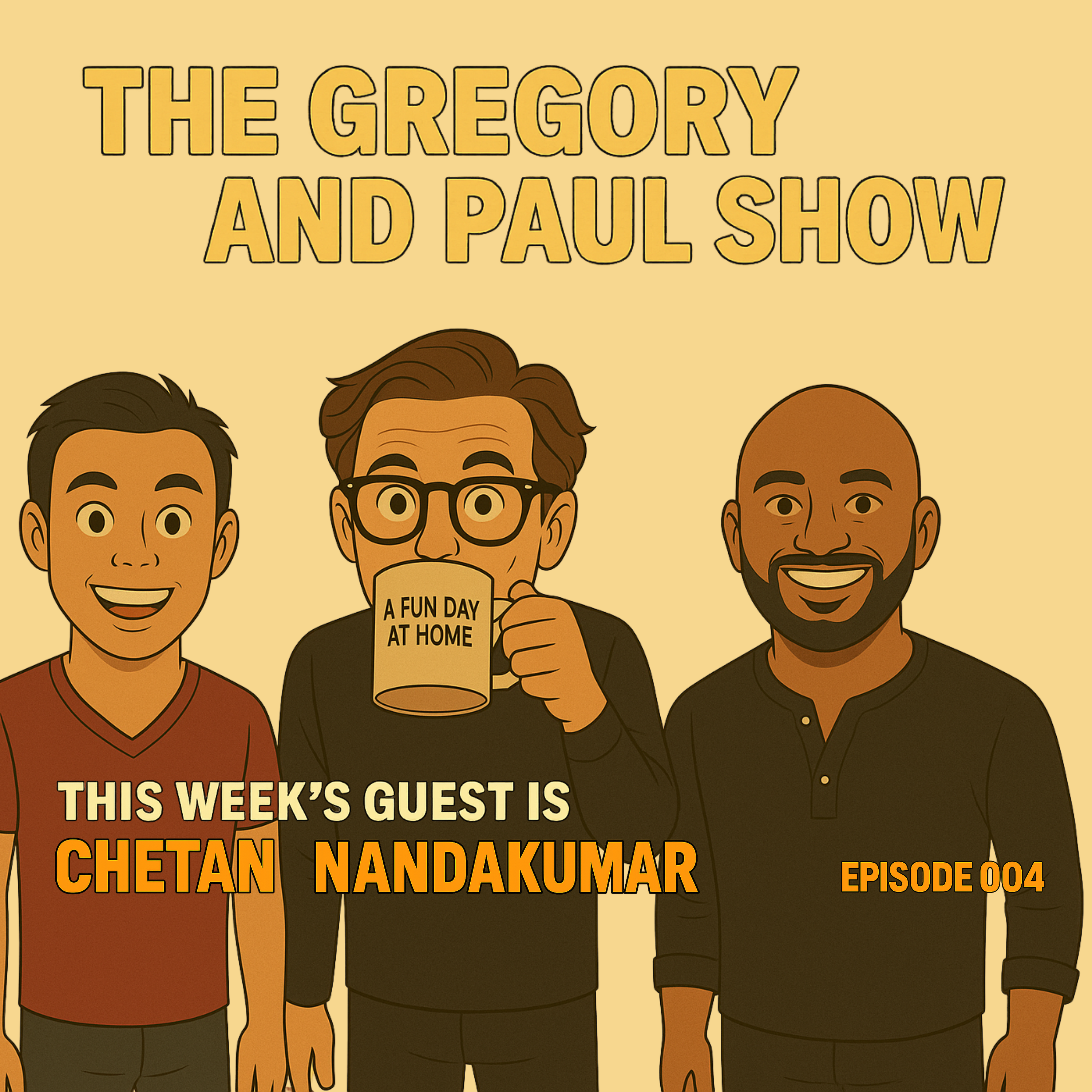
[00:00:03] Speaker A: All right, welcome back. This is the Gregory and Paul Show. I'm Gregory.
[00:00:08] Speaker B: I'm Paul.
[00:00:09] Speaker A: And every week we break down the latest in SaaS, startups, AI, whatever people are debating on the Internet, on X, and on Reddit in particular. We always like to talk about the hottest topics. We like to talk about memes. And what was our first topic for the show today?
[00:00:24] Speaker B: Well, you. Your tweet February 20th did pretty well. You want to talk about your CrowdStrike investments?
[00:00:31] Speaker A: Okay, yeah, I think we've talked a lot about. Well, I think let's. Let's frame the context here.
[00:00:37] Speaker B: Let's reframe. That's right.
[00:00:38] Speaker A: Yeah, let's frame the context here. So the SaaS apocalypse, everyone's well aware
[00:00:43] Speaker B: we've talked about that multiple times.
[00:00:45] Speaker A: Correct. So SaaS stocks all crashed down. I think crash is the correct term. Like, these things are down 50, 60%, but massively many of them come back. And so I believe. Believe I was in on vacation or whatever.
I don't know.
I can't really have the exact moment where I woke up and I'm reading X and I read that, like, CrowdStrike is down another 10%.
It's insane. Like, I just look at this going like, I couldn't believe it was down that much from whatever it had fallen from. Right? Like, and.
And I.
I can't remember if I did some research before, after I bought it. I remember just looking at it going like, this is the dumbest thing I've ever seen. Like, it was really obvious to me that, like, whatever was happening in the market, like, this was completely mispriced. And I tweeted out, like, whatever cash is left in my, like, my trading account, which just so everyone understands this is really important. I have a financial advisor, like most people should, and I don't touch any of that money. He takes a lot of money. He was very nice to me. And he's like, you want a fool around? You want to lose money? Here's this. I have a little train count that way. Like, if I risk it all on NFTs or whatever I do, I'm not going to be poor and destitute. This is absolutely what I recommend everybody do. If, even if it's $100,000, just put it in Robinhood or whatever do set aside so that account, I'm a life savings, not all the stuff my wife has in pork bellies or whatever it is.
I took whatever I had left yeah, exactly. Right. And gold. Gold bricks or whatever. And I put it in a crowd strike. And I just like, this is the dumbest thing ever seen. And then. And then I did read up on it, probably after I made the investment, like Anthropic released. We talked about the show. Believe they released a street tool. Yeah, but the tool is just like. It's just a little agent that goes into your code and finds little, like, doohickeys and gizmos that are out of date and updates them. It's not a replacement to CrowdStrike.
[00:02:43] Speaker B: All right, the Luster shirt stock is doing well, as Pocke averted. All right, let's move on to the.
[00:02:50] Speaker A: The. Right. So the. The.
[00:02:52] Speaker B: The.
[00:02:53] Speaker A: The punchline here is like, not only is CrowdStrike back, but I believe no one knows for sure. People found out that with the war in Iran, maybe we need some really good security. Security software.
[00:03:06] Speaker B: How do you not.
[00:03:08] Speaker A: It's not enough.
[00:03:09] Speaker B: And you should not vibe code your own security apparatus.
[00:03:12] Speaker A: Yeah, I think the market woke up to that.
[00:03:14] Speaker B: All right, okay, so the real topic of today's show, we have three huge, huge topics that we have to talk about.
[00:03:22] Speaker A: My God. Okay, the first one. You're scaring me.
[00:03:25] Speaker B: The first one, Pentagon blacklisting, Anthropic, and the CEO of Anthropic, Dario responded with the most unhinged CEO memo in all of Silicon Valley history. Well, diving to that topic, which I think is a really interesting one, a corporate lawyer went super viral. Millions of views on X explaining how he runs his entire law firm on Claude. 7 million views, 21,000 bookmarks. We should really talk about this because this is super interesting. And then the last one, big one. Among all of our other topics, 55% of the latest YC batch uses Supabase. Not because of any crazy awesome sales tactic or marketing tactics that Supabase use, but because clock code defaults to it. All right, so let's dive into Daario versus Pentagon. Our very first one.
[00:04:19] Speaker A: Oh, my God. Well, you have a take on this? Yeah, you go ahead, set it up.
[00:04:24] Speaker B: I'll set it up. I'll just explain to anyone who's still living on the Rock and haven't heard
[00:04:28] Speaker A: this as it doesn't know.
[00:04:30] Speaker B: Right? Yeah. So Pentagon formally designated Anthropic a supply chain risk. This is the first time the US Government has ever done this to a American tech company. So in the past, America has designated other tech companies, such as Huawei, zte, which are Chinese tech companies, and also Kaspersky Lab, which is a Russian Foreign adversary tech companies as supply chain risk. Right, Makes sense. But Anthropic is a San Francisco startup. Right. Founded by a former OpenAI researcher. So that's huge. But you know, after, after this, after the beef, Dario, the CEO, responded by writing a 1600 word memo calling out a couple things. One is OpenAI's Pentagon deal calling out their rival as safety theater. And it also peeled the curtain back a little bit on what the palantirs pitched back to Anthropic as a concealment.
So this is, this is super interesting.
[00:05:34] Speaker A: What do you, do you have a perspective on this? I mean, I was really public on Twitter about what I thought about this, so. And I don't think my position's.
[00:05:41] Speaker B: Yeah, so. So first of all, Daario is stuck in a rock and hard place, basically. Either you take the deal with the government and give up a lot of the safety mission that Anthropic has. The whole entire setup of Anthropic is safety first. That's how they pitched all of their mission to their employees.
[00:06:02] Speaker A: Yeah, it's their core.
[00:06:04] Speaker B: It's their core belief. Right? AI safety above everything else. And you know, giving department war cloud access to automate missiles or do mass surveillance is not really safety first. But at the other end for, for, for Anthropic and shareholders is that, you know, U.S. government, the best customer that you can ever have as a business. I mean, my take is that it's, it's an impossible choice for, for a.
[00:06:32] Speaker A: Interesting. So you think he's just. Well, so how about this? So my take was that there's a couple people I was chatting with on Twitter about this. It's no surprise that like the highest level, I think the Pentagon asks for help. You're an American citizen. It's your duty to help. And I've always believed that. And it's exactly what I would do. And sometimes they do unsavory things and I think those things are necessary to security of the world. So I don't. That's my position. This is what I think Anthropic ultimately should have landed. I don't buy the like, moral argument that they have against working with the Pentagon. And there's a couple of points that I thought were important. One was that I think they're very arrogant to declare that they are the ones enabled to make this moral judgment. So they're disagreeing with the Pentagon and ultimately saying that like they are better at making those decisions in the Pentagon because the Pentagon is a big organization with lots of people, lots of very, very Smart people work at the pentagon. They employ PhDs and scientists and they probably have access to more computing power than Anthropic and OpenAI. Like this is one of the world's largest most powerful organizations, not just in its like, yeah, capabilities in the real world, but its scientific and computer and technology capabilities are strong. They also have a lot of complexity when it comes to like making decisions at the Pentagon. They don't just willy nilly do things. Even though people might characterize like that or might feel like that there's actually a lot of like protocols that they have to follow in order to do things. Okay, so I think that like, so I think that the idea that like Anthropic is better enabled to make military type decisions than the military is a ridiculous statement. I think it's very arrogant of them to say that like they know how to do that better than Pentagon because the Pentagon's not saying we're not, we don't have protocols, we don't believe in AI safety. Pentagon is saying that we have certain ways that we operate that we would like you to abide by. And they're saying no, we don't agree because we think we're smarter and better at making those decisions than you are. This was the part that like people weren't able to satisfy me with on Twitter that like, I understand the position that Anthropic has a certain position they've taken, but the idea that they were better at it is the one that no one was able to convince me that somehow they're better at making these decisions than the Pentagon.
[00:08:51] Speaker B: So the fair point on the war part, but that's not where the negotiation actually broke down.
So the Pentagon.
[00:08:59] Speaker A: Okay, yeah, go, you go ahead.
[00:09:00] Speaker B: The Pentagon basically accepted all of Anthropic's terms except one phrase, which is bulk analysis of acquired data. So that is getting into the territory of mass surveillance.
[00:09:12] Speaker A: But they were just saying that they wanted to be able to do it, just was like, right, right, it doesn't.
[00:09:17] Speaker B: And so they're using private company. Right? That's the literally baked into Constitution, which is the freedom of not being surveillanced, let's say by the government. So I, any private citizen could make the judgment call of let's not enable this, this practice.
[00:09:36] Speaker A: I mean that's ultimately a legal issue. Right. I still stand by it that like Pentagon was asking for a lot in the negotiation and the way they responded to is a different topic. But I still, I still stand by my statement that like they wanted to be able to do it, they want to be able to do whatever they needed to do. And Anthropic said, no, no, no, no. We know better how to make those decisions than you do. The, the thing didn't say like we are 100% going to do X, Y, Z this way. Like they just said like we want to be able to do this.
[00:10:09] Speaker B: So I think, I think back to my first point is he has to say this, right? Because he, he essentially Dario entire mission and a lot of his employees joined the company in spite of, let's say OpenAI all the other AI labs because of AI safety reasons. Just raise one point because in his memo he specifically talked about Palantir and he kind of peeled the curtain back a little bit. Right. We always ask what does Palantir actually do? And Palantir's pitch back to anthropic and also OpenAI is essentially say you have some unhappy employees. You need to offer them something that essentially makes them happy and conceals the fact that what you're doing with the government and basically that's what Anthropic service provides. Sorry, Palantir service provides that.
[00:11:00] Speaker A: They don't. They're not clear about what they do to the employees. That's what ultimate is accusing them of.
[00:11:04] Speaker B: No, no, no. Basically what Palantirs pitch back to Anthropic is that Palantir will offer a way to, to help measure what their model is doing for the government.
[00:11:15] Speaker A: So Palantir is going to measure anthropic in this scenario?
[00:11:19] Speaker B: Yes. So Palantir is what I'm going to assume is.
What I'm going to assume is Palantir is going to be like a neutral third party that measures how the model
[00:11:29] Speaker A: is being used, how it's being used.
[00:11:31] Speaker B: That's fair. But it, they will cleverly fuscate how some of the details so that the employee ease will be happy.
[00:11:39] Speaker A: I mean for me it was kind of like my example was like Lockheed Martin, so the Pentagon went to Lockheed Martin said and said we want you to make a self bomber. And Lockheed Martin said okay, great, like how can we do this? They didn't say like we, we think stealth technology is morally bad. You could make an argument against it. Right. Why do they want stealth technology? They want to be able to fly into the Soviet unit and drop an atomic bomb without being detected. That's what they wanted stealth technology for. Right. Lockheed Martin said, okay, like we understand that this type of deterrent something that United States needs and we're happy to help you. So I still at the bottom line think that, like, I still would go. I still stand by my statement that, like, they, they're very arrogant like, that they think they know how to make these decisions better in the Pentagon when it comes to that type of thing. The surveillance one is a complicated one.
[00:12:25] Speaker B: I think that's the entire point that they're standing on, is the surveillance piece. Right?
[00:12:29] Speaker A: Well, they, they still said that they were more moral than, like, they didn't want to work with the. You know, the other one was autonomous weapons, right? They didn't. They did not.
[00:12:39] Speaker B: Technically. Yeah, technically they did not push back on the autonomous weapon part. They pushed back on the surveillance. And I think they do have the right to push back as, as a private citizen. I would definitely not like to be surveillance, however, which is a good transition into.
[00:12:55] Speaker A: Yeah, that one.
[00:12:56] Speaker B: Okay.
[00:12:56] Speaker A: Yeah, okay. Okay, go ahead.
[00:12:58] Speaker B: Well, I'll just throw this out. We won't spend a lot of time. Okay. Okay. Meta. In the same week yesterday, actually, Meta's Ray Ban eyeglasses, a contractor in Kenya revealed that they are manually reviewing intimate footages of people using this product. So out of the 7 million glasses sold, basically in the hin terms of service is this meta reserves the right to watch back all of your footages. I mean, this is.
This is basically the exact kind of thing that a private citizen should have opt out.
[00:13:32] Speaker A: Well, I should know. I would never get those glasses, right? The whole thing is stuff like, it even goes back to surveillance day too. It's like, I just, I don't. I guess I'm very pragmatic. Like, there's just so much surveillance happening. I guess I look at this more about, like, how do you live in this kind of world rather than like these kind of theoretical ivory tower arguments, right? Like, there's just so much stuff happening. And also like, the, you know, what's his name? When it was revealed that like, when it was leaked that like, the NSA was doing all these things anyway, so we have to take like, Right. Like there's just so much stuff happening. Like, that's why I'm like, I don't even. I don't even. It's even hard to formulate, I think a, like a pragmatic opinion on stuff because there's just so much stuff happening. I think this meta one's a good one example, right? It's like you're just like, if you use these things, you're just like leaking, right?
[00:14:20] Speaker B: You're leaking your data, you're giving up rights.
[00:14:23] Speaker A: And like, maybe people don't care, but I don't Know, I don't know.
[00:14:28] Speaker B: I. I think we should be fine. Let's talk about.
Wait.
[00:14:32] Speaker A: On the Facebook one. The point I want to make of this was that the guy who. The tweet that I read on this was that people don't. People just don't understand how much of their data is being, like, used by Facebook. That was what I think was. The point was that, sure, they get my video and it goes somewhere, but. But the idea that like, or the extent to which they are using that to like, do analysis on all of that is not well understood. And. And the guy said, like, look, people knew they wouldn't be happy with it, but that's kind of like saying, like, if you know how a sausage was made, you probably wouldn't need it. All right, you want to move on the next one?
[00:15:03] Speaker B: Yeah. Let's talk about what the builders are actually shipping instead of all the meta topics.
[00:15:09] Speaker A: You gave me all the hard ones this week. These are like, these are. These are. These are in depth topics.
[00:15:14] Speaker B: Yeah, totally. Okay, so cursor just announced. Always on coding agent that runs while you sleep. Developers has been asking this for asking for this for a really long time. Developers or devs on X has been showing how they're spawning entire fleets of Claude instances or agencies or agents as sub processes. Essentially what this means is that Vibe coding isn't really a meme anymore. It's not even about coding anymore. It's about using agent to actually ship products and as infrastructure. So some. Some key facts a cursor has been able to automate or spin up. Always on agents. They run in the background, they're persistent, they share memories with each other. The evolution has been going from copilot code completion to being your assistant where you can plan, you can chat with it, to completely autonomous without a human input.
[00:16:13] Speaker A: So autonomous coding agent.
[00:16:15] Speaker B: Autonomous coding agent, really. The human is no longer in the loop in the middle at all.
[00:16:21] Speaker A: Have you tried this? Does it work?
[00:16:23] Speaker B: I've not tried this yet because I switched off of cursor onto clock code. But now you know.
[00:16:29] Speaker A: So game is what is the val this it like it like, how much more efficiency do they need with Vibe coding? I mean, come on.
[00:16:36] Speaker B: So really, it's about how long are really efficient now?
I don't really actually think it's efficiency. It's just about how much input you need to give back to the system.
So right now with Vibe coding, you still have to be in the driver's seat. This is starting to begin to remove the human away from the Driver's seat.
[00:16:56] Speaker A: Yeah. So I mean, like the security one I think is a good example where I believe this has existed already. Tom has agents have plugged.
[00:17:03] Speaker B: Yeah. Openclaw, which is kind of like the first instance of this. But.
[00:17:06] Speaker A: Oh no, I was thinking if, like. So I know the security world has had agents that like go into your systems, like look for flaws and like fix them automatically. So it's actually the concept, the concept has been around for before this that there was like autonomous agents that actually wrote code. Because I know people that have like startups have done this. So it's not new. It's just that, like, it's probably easier, more pervasive, you can make it do more things. But. But that's an obvious use case I see is like, oh my God, it found like a security flaw. Like, let's make sure we get patch install. Like, that's a really straightforward one that makes. Makes a ton of sense.
[00:17:41] Speaker B: I think the real story here really is just that while everybody's still talking about vibe coding, what we really should talk about is what kind of products that you can generate with these kind of orchestrations and agent sub processes. Essentially what we're really doing is we're turning these agents into microservices where you can spin up and down. And what Cursor did is they productized this. Now they're selling these sub agents to back to the people. It's really interesting. It's really just a repackaging of agents instead of just using, let's say, Claude by itself. So how does this work?
[00:18:18] Speaker A: Like, what is an example of something that uses this?
[00:18:20] Speaker B: So what you should really do is once you use this, all of the agents spin up on the background. The way that they do this is by launching sub agents. So you typing a prompt and because the. As you type into a prompt.
[00:18:39] Speaker A: Yeah.
[00:18:39] Speaker B: The agent might have to write some code, do some tool calling, do some planning. Essentially you parallel process this and offload it to multiple agents so that they can all communicate with each other. Another, because Cursor is a wrapper around all of the other foundational models, you could technically get it to use different models all at the same time. Right. So you could.
[00:19:04] Speaker A: What is it? What I don't understand is like, why, like what does this do? So you have multiple agents coding all at the same time.
[00:19:11] Speaker B: Yeah.
[00:19:11] Speaker A: So that makes it faster.
[00:19:13] Speaker B: It makes it faster and more accurate. So some models are really good at reasoning, some models are really good at executing. Some good. Some models are really good at following instructions.
[00:19:24] Speaker A: So how Is this different than Perplexity Computer which like claims to merge 19 different.
[00:19:29] Speaker B: Yeah.
[00:19:30] Speaker A: So perplexic one use case for something like this.
[00:19:33] Speaker B: Perplexic Computer is not scoped, just coding Cursor MO more or less is said we help developers code that.
[00:19:40] Speaker A: Okay. So that's easy to understand as like. Or easy easier for me to understand at least. It's like Perplexing Computer but like we've constrained the use case decoding.
[00:19:49] Speaker B: Yeah, that's what cursors that makes. Right. They sell to developers. Perplexing Computer sells to marketers. Yeah. Yeah.
[00:19:55] Speaker A: So it's just a better, it's just a better version of the tool. Interesting. I mean they hit that 2 billion dollar run rate.
[00:20:00] Speaker B: Dude.
[00:20:01] Speaker A: It's crazy. Like they're creating something over there that people are, people are excited about as well.
[00:20:06] Speaker B: Might as well test it out. So. Okay, let's move on to our segment number three. This is a really interesting one because we've been talking about AI native xyz, AI native agencies, AI native law firms. So this lawyer, a Yale's law corporate attorney, published a X article on how he's using clot to automate his entire law firm post blew up 7.5 million view 21,000 bookmarks. This is super interesting because you sent me a couple days ago where the AI ad startup icon raised millions of dollars and paid some $21 million to the domain. Just went bankrupt and they stopped. If you go to their landing page, it's no longer their marketing landing page in the same week. Basically it's. They're using the same technology but completely different outcomes.
I am. It's interesting to how fast the AI ecosystem moves. It's interesting how these wildly different outcomes can.
[00:21:07] Speaker A: So wait, how is this lawyer doing this? So that it's. It's like that the information is like secured.
[00:21:14] Speaker B: Yeah, so that's a really good question. So some people asked him and he basically said that nobody cares. None of his, none of his client cares.
[00:21:24] Speaker A: Do you believe this is true? I don't even believe this post to be honest.
[00:21:27] Speaker B: So that's, that's one of the hotter takes is that he could be just making it all up.
[00:21:33] Speaker A: I think it's totally made up. I think like we've crossed this like chasm now where like, like a lot of these claims that people are making online about these things, like they just don't, they just don't hold water. There's. I don't, I would not use a lawyer who just is dropping stuff into like a public LLM. There's like recent court, like, rulings that say that there's just a lot of issues with that. It's still an unknown. But like, all that information in there, it's not private anymore. It's like made public. So if you're putting like, private, it just.
And we just would be shocked at. Any lawyer would do that. Like, there's probably tools they can buy that have a privacy layer or you could host your. There's a bunch of ways you could do it.
And the idea that his clients don't care. I mean, I don't know, maybe he's making like just basic contracts or something, but you could do that yourself. So I don't know.
[00:22:24] Speaker B: Yeah. So, okay, really interesting thing here is you probably could find some client that don't care.
[00:22:32] Speaker A: Well, yeah, of course you could find somebody.
[00:22:34] Speaker B: We were talking about this, right? Like, I think what AI has enabled us to do is all of your businesses. Now it becomes like a search problem. You just need to find a select list of clients who don't care. The fact that you're giving AI these, these information.
So, like, right. Like Alan.
[00:22:55] Speaker A: It's just seems crazy.
[00:22:56] Speaker B: I think it could be true because all he needs, like, is what, like a handful of clients to make it into a success.
[00:23:03] Speaker A: And we'll see, we'll see what happens. I mean, like, like, it's interesting. Like, sure, they don't care now, right? But like, when there's a I there, I. There just seems to be an infinite number of, like, legal implications that would be scary.
[00:23:19] Speaker B: I think we don't know what the outcome will be yet.
[00:23:23] Speaker A: Okay.
[00:23:24] Speaker B: Right.
[00:23:24] Speaker A: I'm, I'm not using. I'm not using this. That's for sure. The icon thing, kind of like mixing up other stuff here, you know, that was the guy that had the funny website. I wish we had a picture of it with all the social proof. It was like that ridiculous. It was a ridiculous website that just had like every piece of social proof possible. And everyone kind of made fun of them, or at least a lot of people made fun of them on, On X. And so, yeah, it looks like. I don't, I don't think anyone knows they went bankrupt or not. But just like the site wasn't functioning,
[00:23:50] Speaker B: which is interesting, people stopped caring.
[00:23:53] Speaker A: I think that, like, in the advertising space, you see this, there's actually a lot of discussion about this today. Like a lot of technology companies, I think they get into advertising and they don't know a lot about advertising. So they build a lot of tools that like, don't work very well and don't solve the problems of people in the advertising industry. Because I look at that thing and I was like, like creative, like, sure, there's some, there's a lot of creative tools out there. I don't know if that's a huge bottleneck for people. Like what people want out of ads is better performance.
[00:24:18] Speaker B: So if you, if you can identify one thing, why they went out of business, do you think that it's just they couldn't figure out, well, didn't they
[00:24:26] Speaker A: spend like 8 million, 8 million bucks
[00:24:28] Speaker B: on the, on the domain.
[00:24:29] Speaker A: Domain?
[00:24:31] Speaker B: That's probably the number one mistake.
[00:24:34] Speaker A: Spent too much money. Did it make enough money back? Yeah, like, just, I don't know, it's like, like a lot of startups, right? Like they just, they didn't, they didn't, they didn't build a great business. But like, I think with these advertising startups, like, like the creative production piece, it's only one element. There's a lot of other elements involved. And what ads are supposed to do is like sell your product. And so if the, if the tool doesn't help do that, then it's not going to be a great, a great tool. And creatives, one input does matter. It's not the only input.
[00:25:02] Speaker B: Let's, let's.
[00:25:03] Speaker A: I'm bored. I'm bored with this one. Yeah.
[00:25:04] Speaker B: Okay. This is the distribution apocalypse. Let me get into what that means.
[00:25:11] Speaker A: This is me.
[00:25:12] Speaker B: Okay. Two stats this week that should make every business rethink how they get found or get discovered. First stat is that 55% of the latest YC batch uses Supabase. Not because of great marketing, not because of great sales reps or sales strategy, but because Clockhold simply defaults to it.
And the second stat is that tech media lost 58%, nearly 60% of its organic traffic, which amounts to about 65 million monthly visits. Because of AI overview. Because of LLM answers the question before anyone clicks out to the link. Distribution as we know it is dead. What do you, what do you think, Gregory?
[00:25:58] Speaker A: Yeah, so, so what? So let me, let me summarize what I think you're saying is that because there's a bunch of things like, wrapped up into this topic.
[00:26:04] Speaker B: Yeah.
[00:26:05] Speaker A: So AI overviews on Google and the emergence of AI search, ChatGPT, Claude, whatever it is, all these tools, right? None of them prioritize links.
[00:26:15] Speaker B: Correct.
[00:26:15] Speaker A: And so traffic across the board is declining significantly. We now know that some of the biggest websites on like the, let's call it the media side. Right. They Were things like Mashable, the Verge,
[00:26:28] Speaker B: all of those sites, digital trends diverge.
[00:26:30] Speaker A: Their traffic declined like 80%. I couldn't believe the numbers. Like some declined 50%, some declined 80%. Like because there's just the distribution that they used to get through Google doesn't there anymore. People aren't clicking as much. There's also other issues involved. Like the Verge did go paid. So that's the other thing that didn't. Wasn't mentioned in like one source you and I were looking at. But that most. We've talked about this. Most publications now are, are paid. So if you go the Axios or you go to the Verge or things like Skift, I used to read they all are paid. So having a paid publication like just will hugely diminish your traffic. Right? So that combined with Google means that very few people are going there relative to how they were in the past. And so I think you're, and I think you're like combining that with like all these AI tools. Claude, Claude Code, ChatGPT, Google AI overviews, Google Gemini, that they're now taking the place of what Google provided in terms of distribution. And we're already seeing the result that Supabase is now has this huge dominance, massive dominance because of like the way that Claude code works or prefers or I didn't work. I think it's still the right term.
[00:27:44] Speaker B: But yeah. So this is my take is that this is super scary for all businesses, right, not just tech companies. If you're searching up what to buy for household items, right. It could be completely obfuscated to something that marketers has no visibility into.
So the zero click, or that's what the marketers call it basically essentially obfuscates all of this data away from what marketer used to measure. Right.
[00:28:15] Speaker A: You have no insight into it all. Like we kind of pretended that we kind of knew, even though I don't think we really knew. But like now with AI search, it's just really hard to understand what's going on. Some of the stuff that I've seen too says that like the results are not consistent. So if you do enough research and do enough testing enough prompts, like you get a variance of like outcomes. It's not like there's a guaranteed like first slot the way Google works.
[00:28:41] Speaker B: What do you think? What do you think? Why do you think this is first of all? And do you have or have you seen what kind of like types of solutions that will come out of this?
[00:28:51] Speaker A: I don't, I don't know the full Answer. Some of it is that things are moving. There's so much wrapped up in this, right. Distribution on the Internet. It's a, it's a big deal. Right.
And so you know, some it's moving to AI, AI search engines. We all, we know that for a fact. Right. So some is moving to Clause Moon chatgpt that Google's going to retain some things with Gemini and it's just shifting and it's not going to work the same way it did with like SEO. Also like the media landscape is changing so most locations now are going paid. They're not relying on Google for traffic anymore. You also have Substack and Beehive which emerged and a lot of writers who had big audiences left these publications and gone to those publications. So there's a lot of like niche media properties and things out there that can help with distribution. But like at a high level, if you look at like, if you think of this top down like total distribution on the Internet, who controls it, where the majority of it is like it's shifting significantly and it appears that people will have people marketers, people that like are relying on those, whatever tool like that previously relied on Google for distribution, now relying on a couple of AI tools and there's just a lot less influence that they have over that. And so yeah, I don't, I don't know the full answer.
[00:30:02] Speaker B: Do you think marketers will figure it out?
[00:30:04] Speaker A: So well, like Chatsby is going to include is going to go with ads, right. So I think all of them will eventually have ads. So that'll give people one way to like try to access distribution through those platforms. I don't know how successful the ads will be. I think it's very different use case than, than Google. Like I think people will still spend a lot more time in the AI chat where Google is very clear. Like we're just kind of intermediary. People provide you links, you go here, you click, you go away. Right. That was the model that people understood. Like AI has a very different model. So it provides some ability to kind of drive traffic but it's not going to be the same as what we had in the past. So I just think people have to business the landscape is just going to change and so expectations are also going to have to change about like how things work.
[00:30:51] Speaker B: Yeah, it's what's shocking to me is just how fast these things are happening. It's kind of crazy how fast these things are happening. I think it's over a couple years and the entire really the distribution Channel of the Internet has changed, it's changed dramatically.
[00:31:07] Speaker A: Right. And so it's hard for people to adapt. I think, I think, I'm sorry, there's a. Answers are different depending on who you are. I think that's the best way to put it. Some people will be able to build their own audience, build their own tools and communities. They'll find ways to manage this. Some things are just going to struggle. Like if you were gaming a lot of Google search, I don't know how that, how you fix that. So like those recipe sites, I think that that whole thing's gone. I just think that that's going to end up being this interesting time period, about 15 years where people had these recipe blogs and there was this interesting business around it. I don't see that surviving in any way.
Not in the current or past form, but some of the things will survive. Right. So I think you had a good look at this on a case by case basis and place your bets.
[00:31:57] Speaker B: Do you think this is mostly driven by consumer behavior or driven by AI companies? Or is the businesses driving the change here?
What I mean is will the consumer preference of searching AI drive all of this change or is it just AI companies eating up all of the traffic?
[00:32:26] Speaker A: Maybe it's a mix of both, perhaps.
[00:32:29] Speaker B: Mix of both, yeah.
[00:32:30] Speaker A: Right. Like they invent these tools, they're popular, people are using them, they work differently, things are changing. I actually think it's that straightforward. Like I don't think there's any master plan. It's like, wow, we had this incredible innovative breakthrough. We have this new tool. Whoa. People love it. This tool is really popular now. This tool is so popular it's changing the way things happen on the Internet. Right? I don't know. I think like I kind of, I, I would take a very optimistic view which is like I think it's excellent that things have changing. People have talked for like a long time that Google's dominance was challenging and created issues in the, in the marketplace. So now that they have like real competition, I think it's great. I also think that like it also means that Google won't control the entire market. I think that chat she has a portion of the market, Google have a portion of the market. Maybe other things will emerge. Maybe Claude will gain a big foothold in consumer and be like a third player. Like we haven't had a three horse race and search since for a long time. I remember when people did actually use Yahoo, but it wasn't very, wasn't great. Like Google quickly took over and then, and then just like they just won really big. So I don't know how it's going to go. I mean, I. Yeah, that's what I think. That's how I think it is today. And then I think depending on your business, you need to respond differently. So, like recipes, I think is really challenging. I don't know what I would recommend. I think for other people, building your own audience and building your own community makes sense. I think in person events like that makes sense. I think for some people, they'll figure out AI search. I. I'm. And I'm confident that they will be able to influence it and they will be able to drive traffic from that. So I think there are businesses that will, that will solve that. Right. But it's just going to be different than how it was done previously before.
[00:34:09] Speaker B: Yeah. Yeah.
[00:34:10] Speaker A: I also think that, like, I'll make a. I guess I'll make a push or I'll talk positively about brand. So I think Airbnb was one who proved that if you have a great brand, you can actually just drive a lot of traffic directly to your properties. And they've stopped famous, top of the mind spending on performance. And they just spend a lot of money on brand. And people like, they, they see it in their data. Like people literally go and just type in Airbnb. They don't get bounced there from another site. So that works for them. I don't know if it worked for everybody, but there will be more people who figure that out and are able to make that work perfect.
[00:34:43] Speaker B: Speaking of brand, let's talk about our last segment. I'm sure you all saw McDonald's CEO take a tiny bite of his burger and the Internet went completely ballistic. Have you seen the video yet?
[00:34:59] Speaker A: Yeah, dude, I've seen all the, all the videos.
[00:35:00] Speaker B: It's, It's.
[00:35:03] Speaker A: I've been, I've been loving this thing. I think this thing's hilarious.
[00:35:06] Speaker B: Yeah, you have a really good take on this. What, what do you think? What do you think of the burger war of 2026?
[00:35:12] Speaker A: I think it's really exciting. Very entertaining. Maybe one of the more interesting things happening in consumer marketing a long time. I think, like, everyone. I saw the. I saw the, like, I saw the McDonald's CEO video where the first one where he's like, it's kind of awkward. He's kind of timid. He doesn't look like he loves the burger at all. It's very. It's obviously fake. Like, the French fries are propped up. Like, no one eats their French fries propped up, facing out towards the camera,
[00:35:39] Speaker B: right?
[00:35:39] Speaker A: It's not how you do it, right? So it's obviously fake and staged. And he takes the smallest bite possible. And like, his face, he just. He looks like a vegan. Like, he has, like, no desire. And also he talks about it in a rather odd way. Like he kept calling it a product.
[00:35:55] Speaker B: Product.
[00:35:56] Speaker A: I love this.
[00:35:57] Speaker B: My product. I love this product.
[00:35:58] Speaker A: I love this product. Which was like, that's like that.
[00:36:02] Speaker B: So some burger lover, some ex influencer has said this is the most genius or sophisticated marketing play of the year, right?
[00:36:13] Speaker A: Because it went on, right? Like, so they made that video.
[00:36:15] Speaker B: It went on and on and on.
[00:36:17] Speaker A: Burger King responded with a great response. The guy had a little apron on. He's like, oh, is great burger.
[00:36:24] Speaker B: Only thing missing is a napkin that
[00:36:28] Speaker A: Wendy's got in on it and Arby's and every other influencer. And then I think Tiffany Fong, who's hilarious, there's a video of her eating a burger, which is great. I really enjoyed that. It was kind of long. She just kept eating burger. I was like, okay, I've had enough of this. But I thought it was awesome.
[00:36:42] Speaker B: And then.
[00:36:43] Speaker A: So the McDonald's guy kept making more videos, right?
[00:36:45] Speaker B: Kept making more videos because he's earned the media attention.
He came out with a pitch about how he's using AI using Gemini to come up with product ideas. He said he's going to make a McRib, a chicken nugget or a burger with Korean sauce.
I. What do you think it's. Do you think it's intended.
[00:37:07] Speaker A: Was this dude, that was a tendy chess, right? So. So all this, like, back and forth goes. Goes on. And then which. Which I think was shocking to me because typically in this type of scenario, I think in the past, if everyone made fun of the CEO like that and it came off like not how they intended, obviously, they would have just stopped. But the fact that he kept going and this is the. This is the PR and marketing lesson from this, that he kept going. He didn't let, like, all the teasing and mocking and kids in their mom's basement, like, deter him at all. And, like, if he's new to all of this, the first one is going to look awkward. It is going to be weird. They are going to do some. They are going to make mistakes, right? They are going to, like, put. Put the fries up. That just looked. That was my favorite. I was like, that's so fake, dude. Like, come on. Like, they didn't like, what? I can't believe that someone thought that would be, like, a good idea, right? Like, he's supposed to be eating the burger. It's ridiculous, right? But the fact that he kept going, he just. They just were like, okay, we're gonna double down. We're gonna do this. And he kept being himself. And then he came back with like an excellent response. Right. He just was like, hey, I asked AI for some menu options and it recommend McRib Nuggets and Korean sauce on a McDonald's burger. That's a good answer.
[00:38:20] Speaker B: It's the perfect. Yeah, it's the perfect answer to our previous segment, which is you just gotta do crazy things. You gotta own the. You gotta own your attention.
[00:38:29] Speaker A: But I think it's a great example too, of like, founders, like startups, like, people out there, a lot of the time, they're not people that spend a lot of time in front of video. They don't go out in public like this. Just like him. Like, he's. He's not someone I've seen in commercials. I don't recognize him. I don't know him. I don't follow him.
[00:38:45] Speaker B: Correct.
[00:38:45] Speaker A: On LinkedIn, I don't pay attention to his TikTok. He might have one. And so it was really different for him to come out and do this. And of course, like, the first one just gonna be a little bit strange. And he kind of like, he built in public, right? So, like, I think, like, founders should take this lesson. They should get out there and like, and it's okay if, like the first time, first 10 times you get teased, you get mocked. That might happen. I think for most people, if you don't have a. If you're not the CEO of a huge brand like McDonald's, like, people are just not going to pay att attention. That's okay too. But I love this lesson that, like, just keep going and just be yourself. Like, I think that the guy just kept doing his videos where he. He kind of looks like a cfo. He. He's dressed what I would describe as rather conservative. He's in like, very simple kind of conservative office. Like the other Burger King one. It was like filmed in the, like, kitchen. He had an apron. He just looked every different person. And I like that. Like, the McDonald's guy didn't like, wasn't like rattled by any of that. They then take them down in the kitchen and then make it even more fake. Right. He doesn't look like the kind of guy spends time in the kitchen. He looks like a finance person. There's a Lot of time in computer and is really good at making the books balanced. McDonald's is a fantastic. Tom's a fantastic business. Do you see that chart where they. They showed the. They showed the economic performance of all the burger Brands at McDonald's is.
So he's doing something right.
[00:40:07] Speaker B: He's doing something right, right?
[00:40:08] Speaker A: He's doing something right, right?
[00:40:10] Speaker B: Yeah. Yeah. The top comment of that thread, I would like to call it out, is McDonald's is a AI lab disguised as a real estate company, disguised as a fast food chain, disguised as a maker of McRib Nuggets. Are you gonna get the amazing business?
[00:40:28] Speaker A: Are you gonna get to make rub and McRib?
[00:40:30] Speaker B: Yes, with Korean sauce.
[00:40:32] Speaker A: That's my other favorite favorite economic chart that shows the S and P performance with the McRib and without the McRib. Have you seen that one, dude? That is brilliant. Guess. Guess. When the performance is better with McRib. When the McRib is available, stock performance is better. I would like to measure quantifiably, measurably true proof, data proof.
[00:40:57] Speaker B: I would. I would like to imagine Donald Trump calling up the CEO of McDonald's. Hey, buddy, help me out this midterm.
[00:41:04] Speaker A: I need to put the maker a
[00:41:06] Speaker B: couple bump on the spy. Please put.
[00:41:09] Speaker A: Dude, that's funny.
I love this. I. I thought this was excellent. It was one of the more interesting. It was a nice, like, it was a nice break. Yeah, dude. Also like anthropic and the Pentagon and we're invading people.
It's so heavy. And like, this is like a different topic. We don't have anything at all. But I want to talk about it. Like, the Internet got a lot less fun like it used to be. It's very dark. It used to be really fun. There used to be all kinds of like funny things there. You and I made lots of memes. We spent a lot of time on Reddit. I put lots of goofy posts onto X. I remember when X launched, like, it was kind of a goofy thing. I remember thinking, like, this isn't very useful, but like, kind of cool. I loved that about the Internet, right? Kind of moved in this new phase where everything is so charged and like serious and the topics are so heavy and stuff. And so I love that like this burger thing emerged and kind of like broke through. Broke through and kind of like, yeah, I would. I want to see more content like this, right? Like, I. I kind of feel like I get at high level too, actually. It's really important. There's obvious economic incentives to make Everything really heavy, really scary, really outrageous to get people to click on social media because it makes certain cohort of people trillions.
[00:42:27] Speaker B: But more CEOs should put out more light hearted content like this and make mistakes.
[00:42:34] Speaker A: Yeah, that's awesome. All right, do we have any more topics?
[00:42:36] Speaker B: The. No, that's a. Let's. Let's go through the outro. Let me go through my take the. The outro take.
Okay.
Eventually I'll figure this out. So here's what ties this whole entire episode together. Darius fighting the Pentagon over what agents should be allowed to do. Cursor shipped a whole bunch of agent that cold while you sleep. A corporate lawyer is running his entire firm on one. And you know McDonald's CEO is using Gemini to pitch McGrip Nuggets turning to a stock narrative. So the whole thing ties together is the agent economy is here or that's what's already making decisions about your entire. The way that you build your startups, the way that you create new products. It's going to be awesome. As long as we don't give up some of our data privacy rights. That's it.
[00:43:29] Speaker A: Awesome. All right.
[00:43:31] Speaker B: You want to talk about your event next week? Sure, let's do it.
[00:43:35] Speaker A: Yeah. Well, I'm doing the event as most people know, next week at AWS in San Francisco. We have over 400 people RCMP now I was just running the numbers. Like 10% are investors, 60% are founders. No surprise there. The remainder are people from large tech companies, tech professionals, corporate development perhaps. We received an enormous number of pitch decks. I couldn't believe it. It was astounding. We got almost 60.
[00:44:07] Speaker B: Have you gone through.
[00:44:08] Speaker A: Yeah, we've gone through them all.
[00:44:09] Speaker B: Wow.
[00:44:09] Speaker A: We have notified the top five who we have asked to pitch. They will be announced in my newsletter on. On Monday and we picked five. And we'll have one honorable mention or someone else included in there that I really liked. The team liked. We were looking through this and so we'll have like a kind of honorable mention one and then yeah, we will pick a winner live on Wednesday night. So it'll be. It'll be excellent. It's gonna be a great event.
[00:44:33] Speaker B: They'll get a amazing price as I heard. We'll talk about it.
[00:44:36] Speaker A: But the trophy.
[00:44:37] Speaker B: Well, yeah, they will get a nice trophy. It's.
[00:44:39] Speaker A: Yeah, I bought a miniature Pac Man. It's not even tabletop. It's like a Micro Pac man machine. So yeah, they will get a micro Pac man as the trophy for being the vibe youe Sass pitch competition winner. Our first ever.
[00:44:55] Speaker B: That's amazing. Okay, I think we're.
[00:44:57] Speaker A: Are we done?
[00:44:58] Speaker B: Yeah, we're good to go.
[00:44:59] Speaker A: Take care.
[00:45:00] Speaker B: See you all next Friday.